
Gridlogic DAW
A studio that hears the way you do.
Write, record, mix and master in one place, with 85 instruments and effects built from scratch and a mix engineer that listens through a model of the human ear. Every device was measured against the textbook design before it went in.
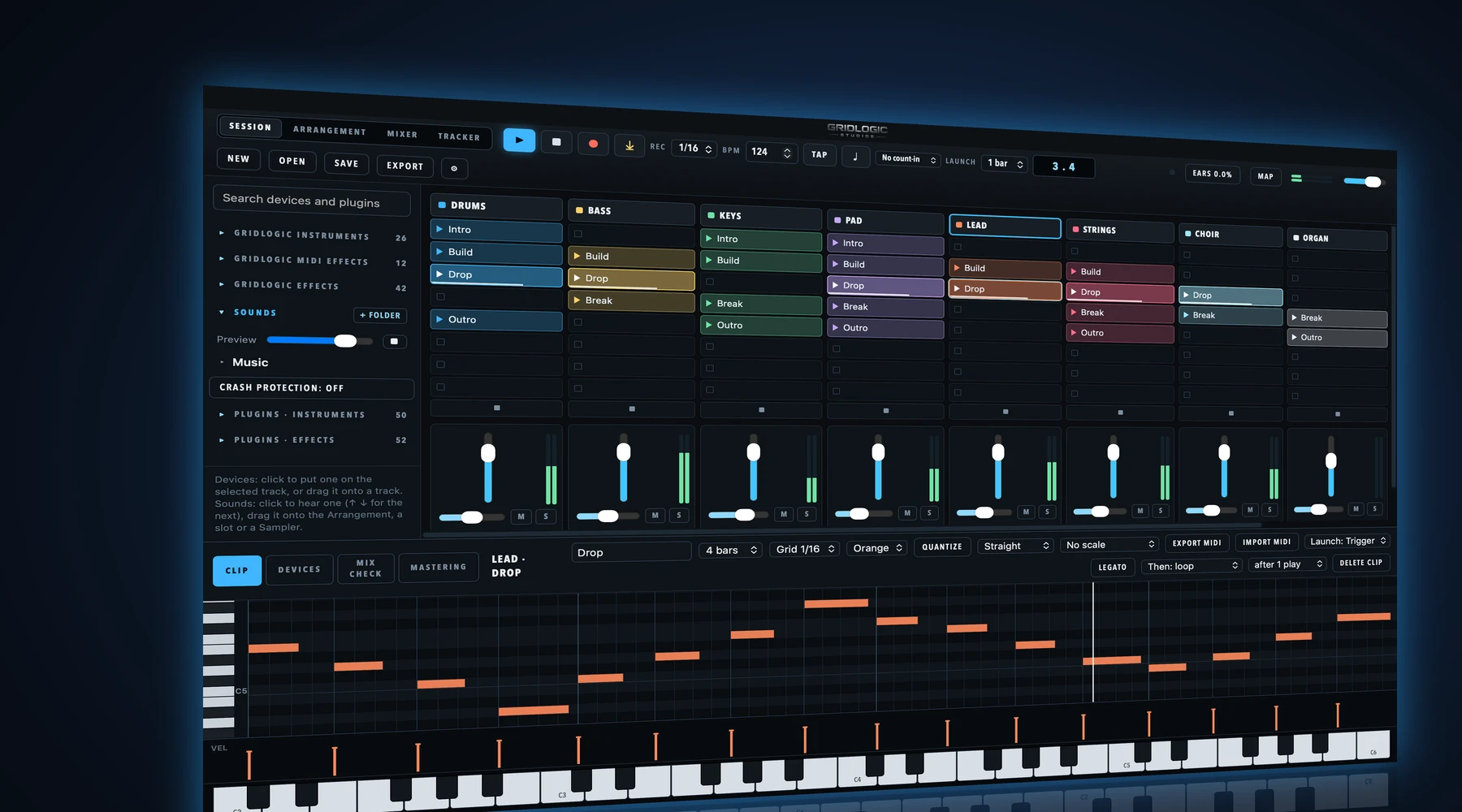
Four ways to build a track
Jam ideas in the Session, lay them out on the timeline, mix them on a console, or write at tracker speed. They're the same song in four views, so switch whenever you like.
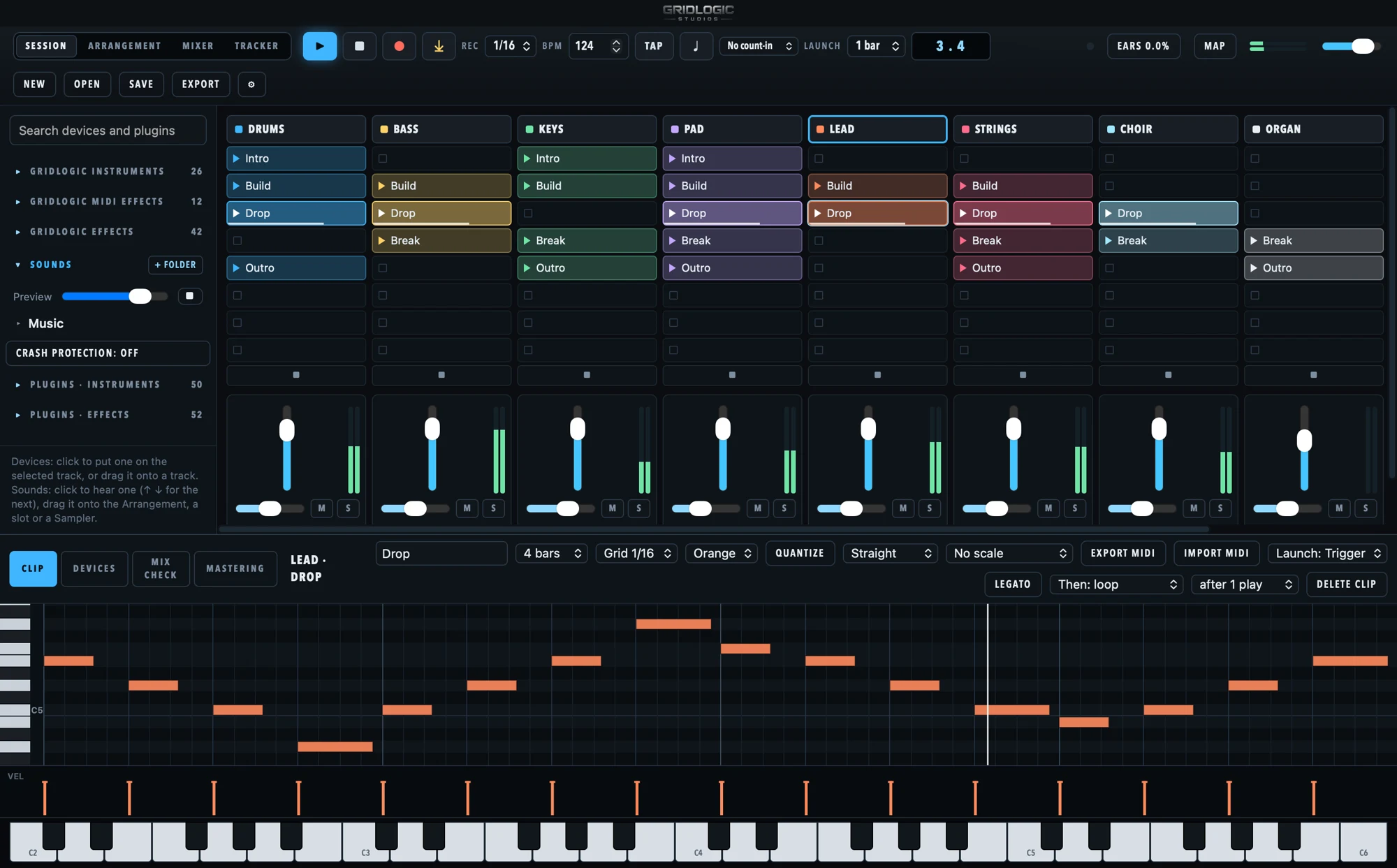
Session
Fire clips and scenes in any order, locked to the bar. Each clip can Trigger, Gate, Toggle or Repeat, slide in with Legato, and pick what plays next with follow actions. Capture keeps the idea you just played even if you weren't recording.
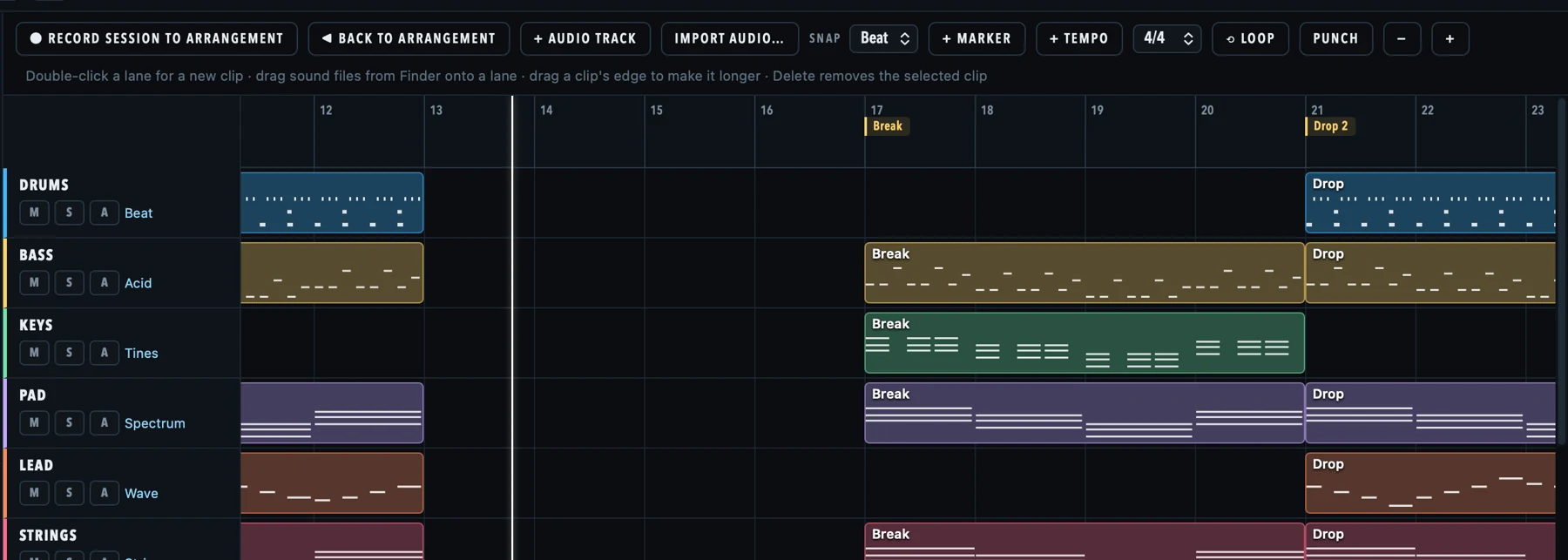
Arrangement
The song from start to finish: markers, tempo and time-signature changes, loop and punch, automation lanes, and audio editing with crossfades, clip gain, warp markers and take comping. Record a Session jam straight onto the timeline.
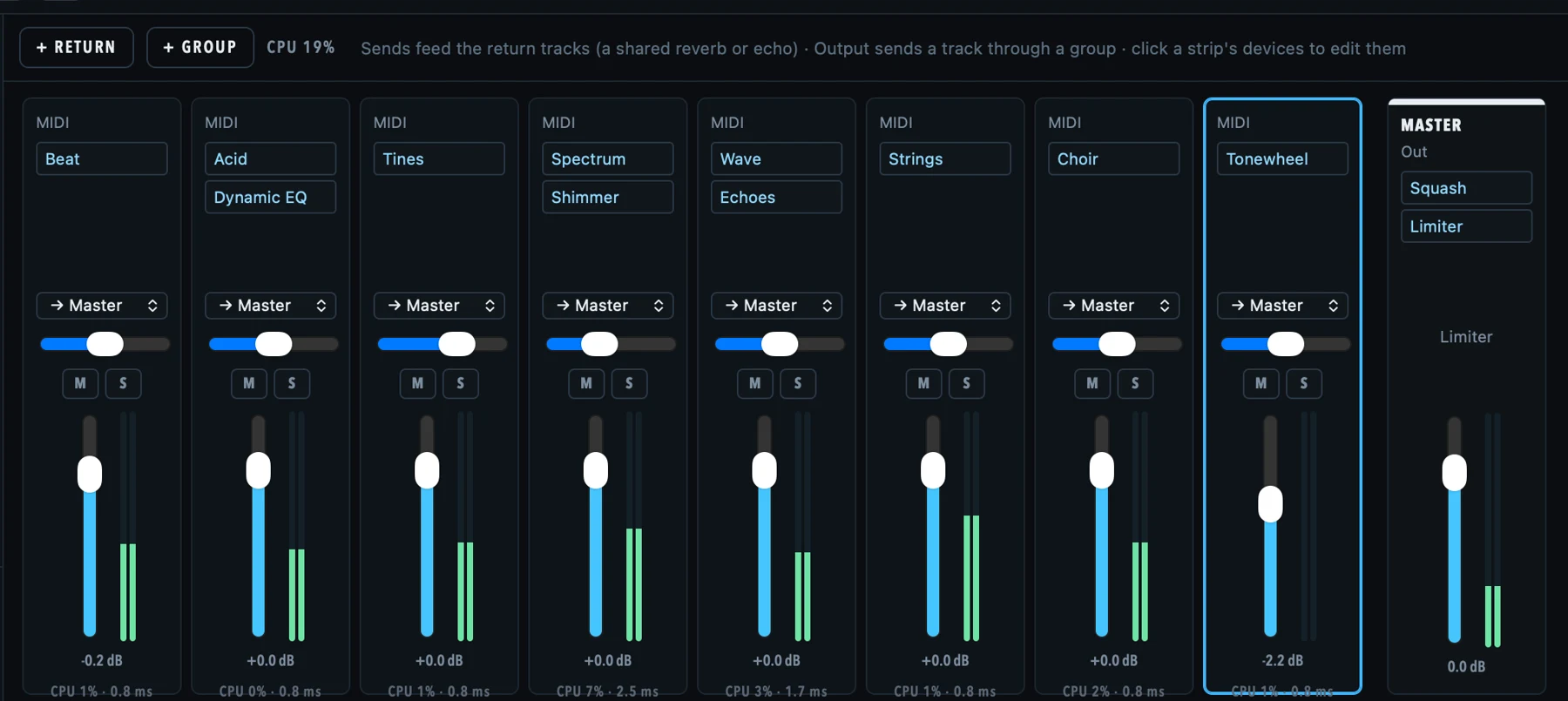
Mixer
A strip for every track with its device chain, return tracks for shared reverb and echo, groups, sidechain from any track, and the CPU each track uses, right on its strip.

Tracker
For those who think in columns: sixteen of them, played live by the engine. Write with the keyboard, a MIDI keyboard or a game controller, and an edit is heard on the next step. Notes slide, bend and wobble on every instrument, tables and grooves give each one its own swing, and Live mode lets you queue rows like clips.
- Three effect columns and 37 commands, from ratchets and chance to slides and vibrato
- Generators for rhythms, melodies in the scale and arpeggios
- Open any phrase in the piano roll; it stays linked
- Every knob of the instrument, right from the keyboard
Thirty-one instruments, all modelled
Synths, modelled acoustic instruments and drum machines, each written from the physics or the circuit, not a folder of samples.
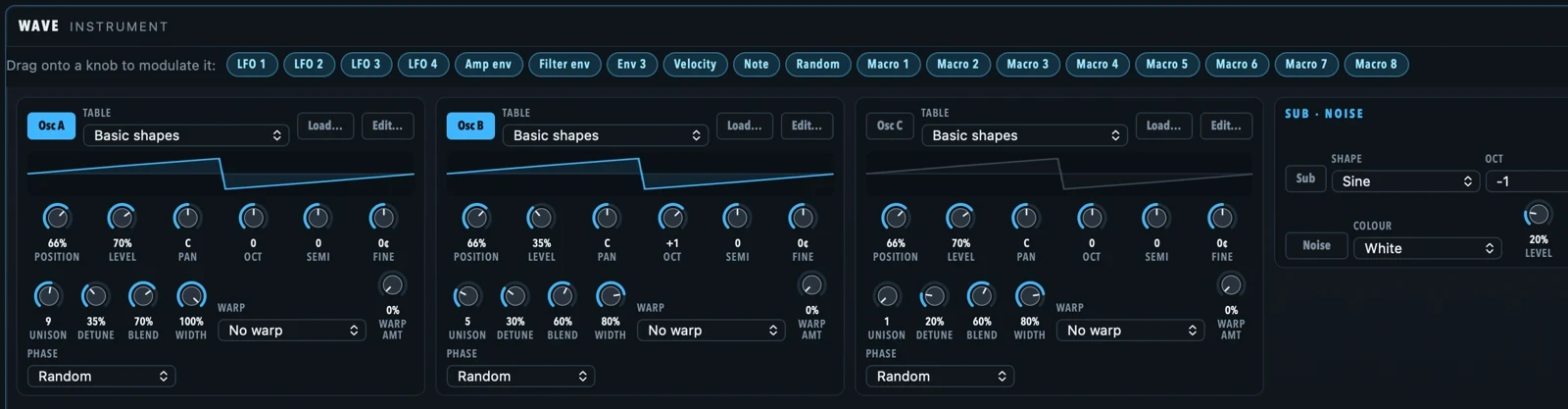
Wave
Three wavetable oscillators with warp, up to 16-voice unison, sub and noise, two filters and eight macros. Drag any LFO or envelope onto any knob, and draw your own tables in the built-in editor.
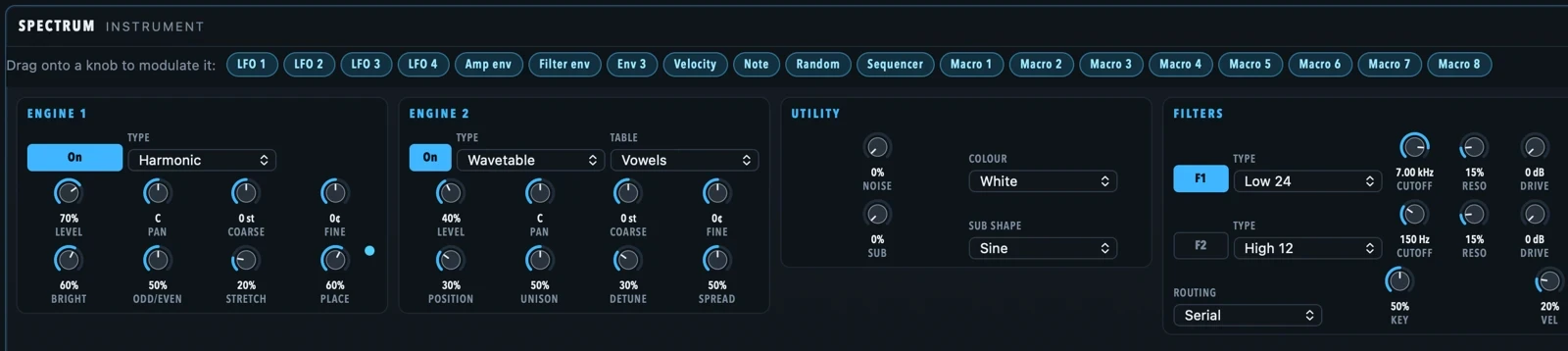
Spectrum
Two engines per voice, from five kinds: wavetable, analog, harmonic additive laid out like the cochlea, modal (struck bars, plates and bells) and granular from any sound you load.
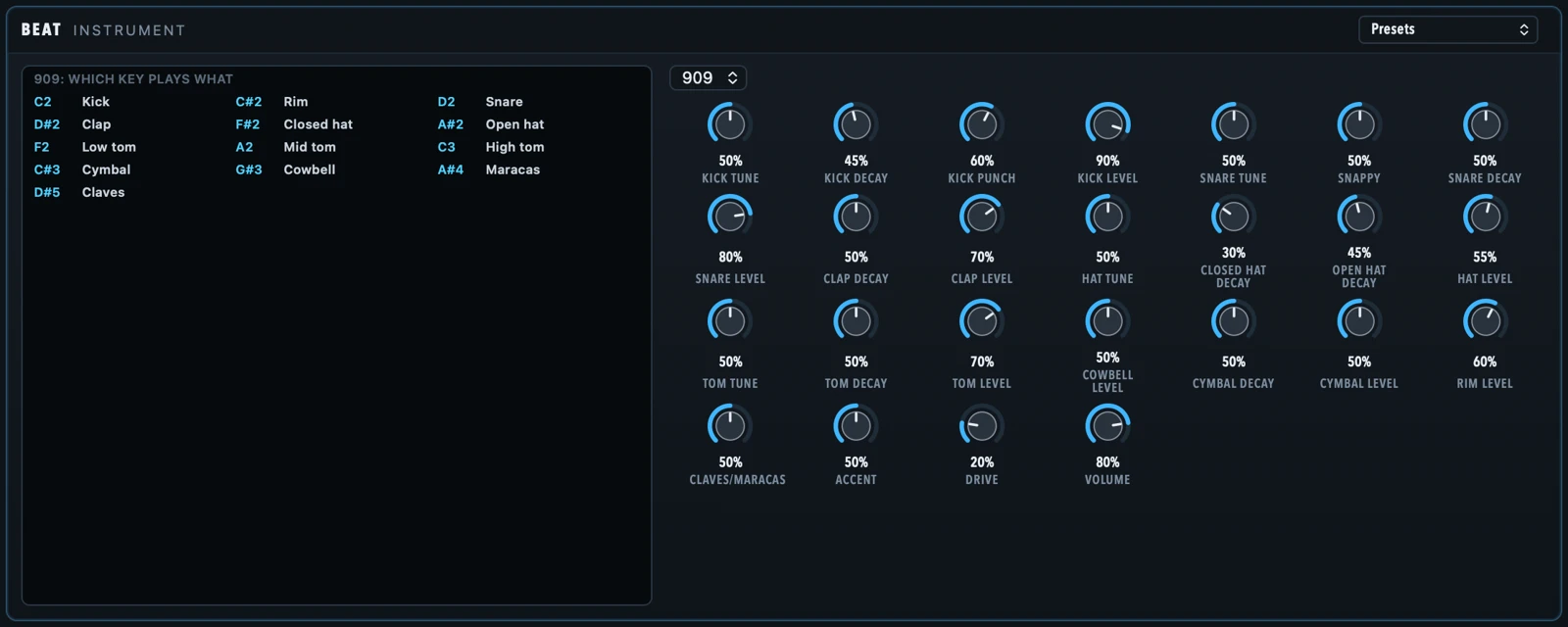
Beat
The two classic drum boxes, 808 and 909, rebuilt drum by drum: the kick that drops into its pitch, the snappy snare, metallic hats and the cowbell. Every drum has its own knobs.
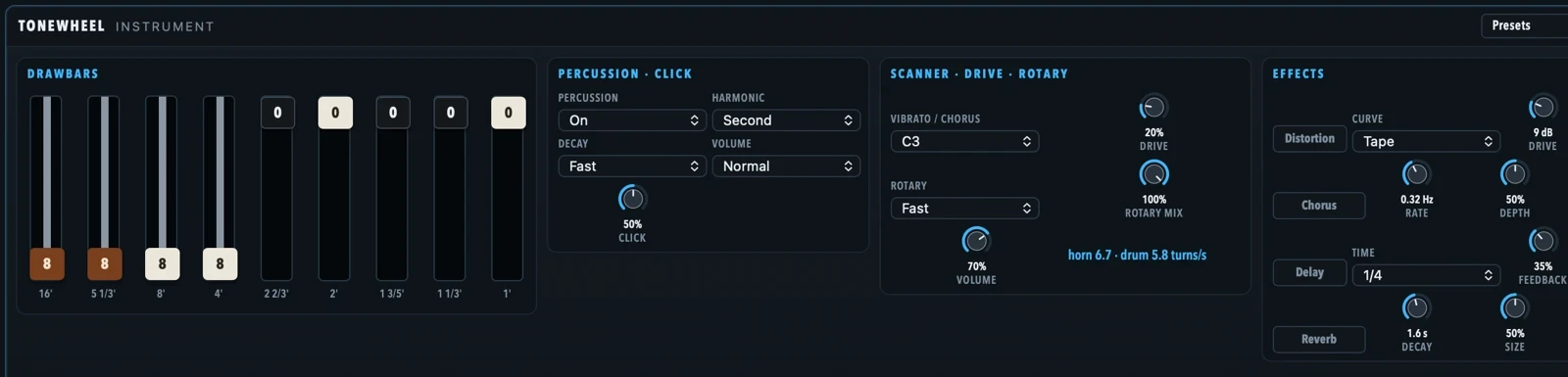
Tonewheel
Nine real drawbars, key click, percussion, the vibrato scanner and a rotating speaker that speeds up and slows down like the real cabinet.
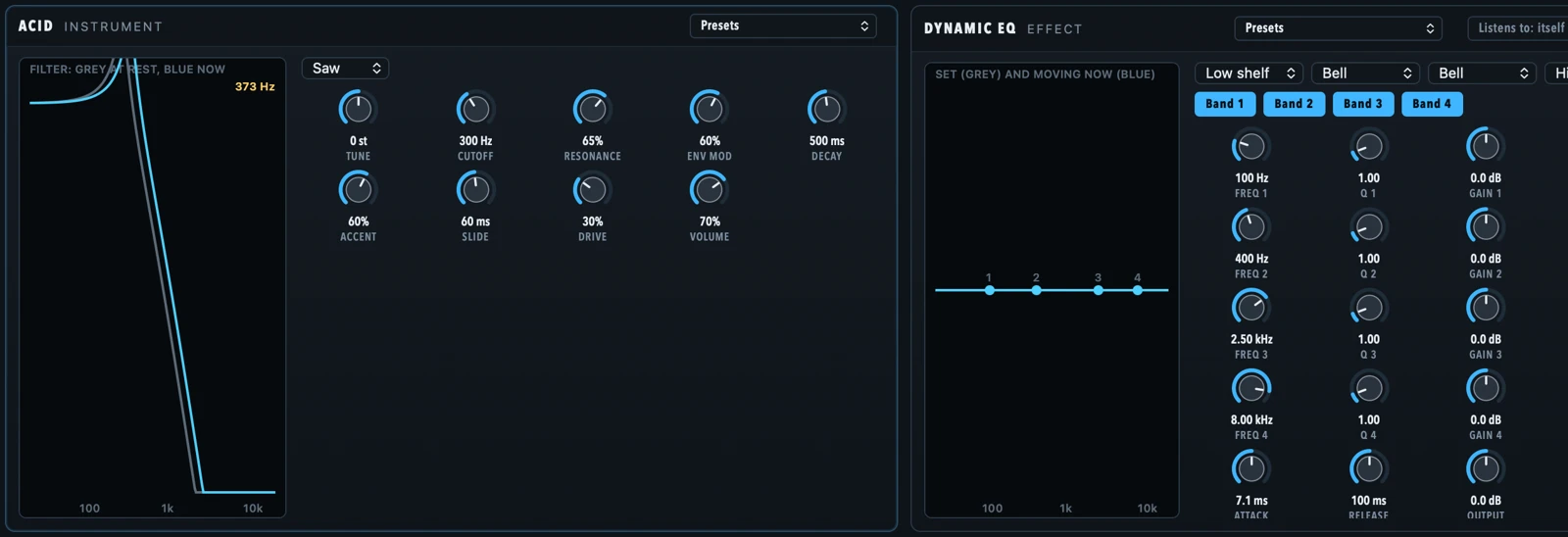
Acid
The squelching bass line: saw or square into a resonant filter, accent and slide. Shown here with Dynamic EQ, whose bands only move when their frequency gets loud.
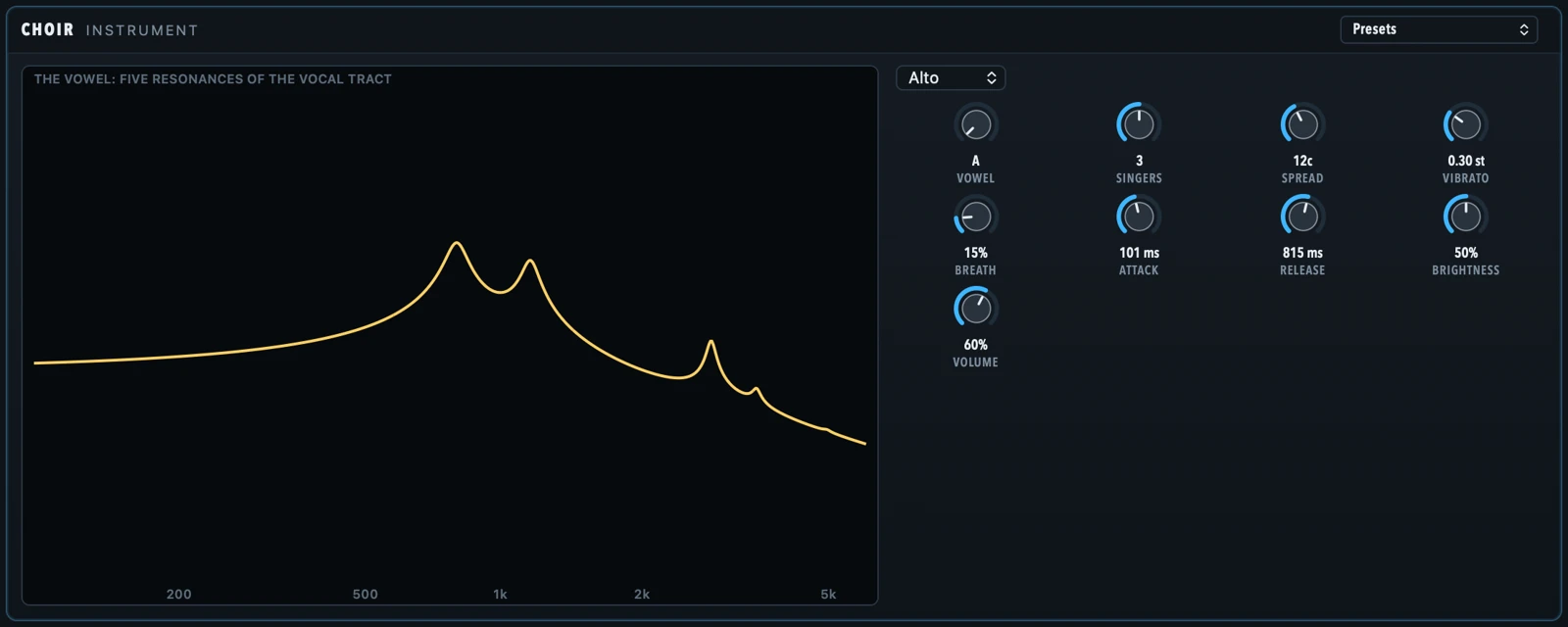
Choir
A choir sung by the five resonances of the human vocal tract. Pick soprano to bass, glide between vowels, and spread up to five singers across the stage.
Six new ones
A concert grand, an acoustic kit, horns, the classic mono synth, electric keys and the 8-bit chips, each built the same way: from the physics, then measured until it behaves like the real thing.
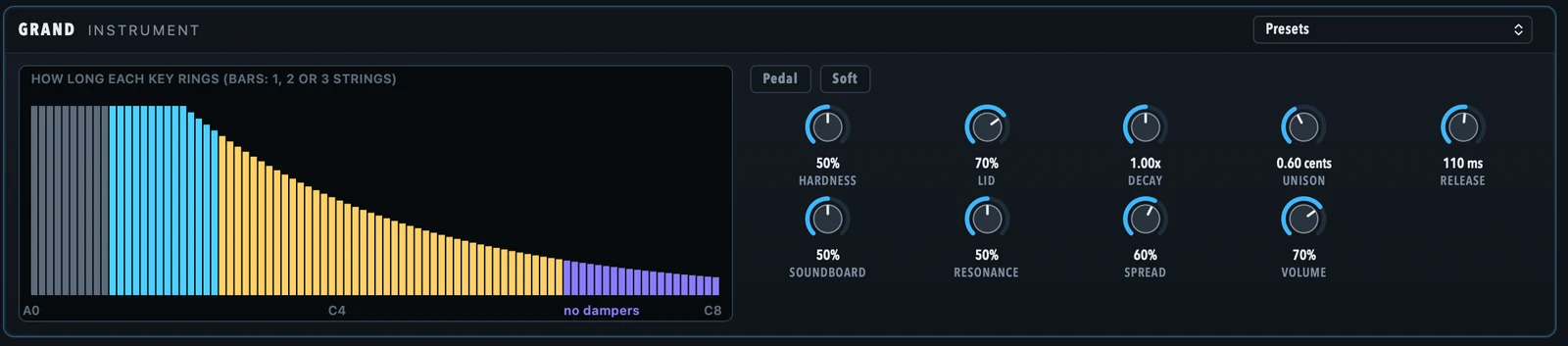
Grand
Every string stretched like a real concert grand's, so middle C's overtones sit where a big piano's do. Hit harder and it gets brighter, not just louder. Hold the pedal and all 88 strings ring along; play softly with the soft pedal and the hammers shift onto fewer strings.
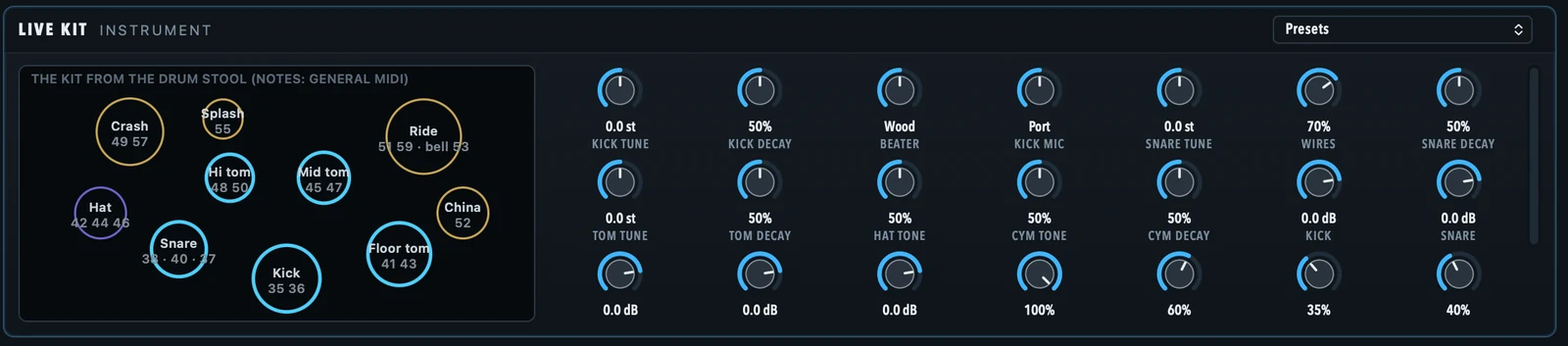
Live Kit
Drum heads that bend in pitch when you hit them hard, snare wires that buzz when the kick lands, a hi-hat you can open and close, a crash that blooms. Close mics, overheads and the room, mixed like a session.
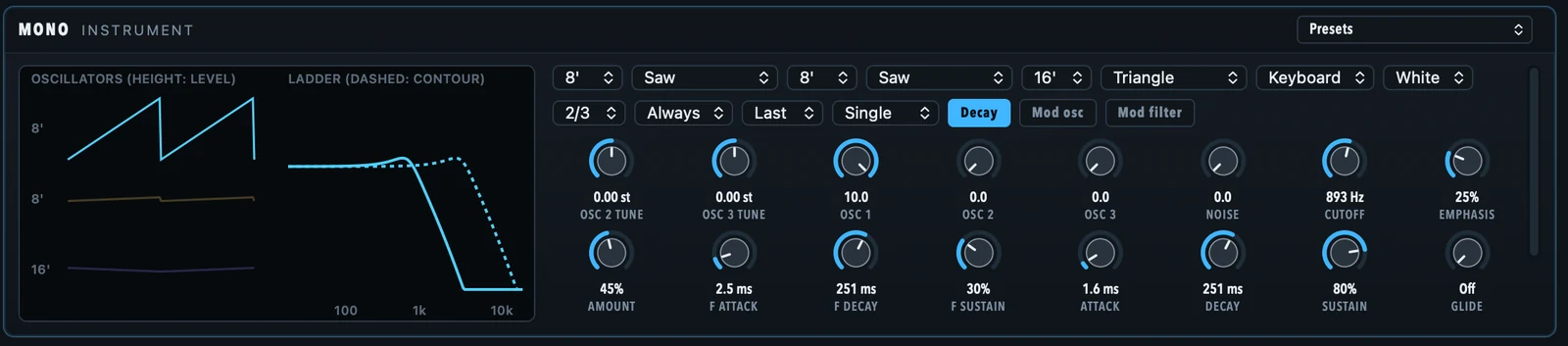
Mono
The three-oscillator mono synth for basses and leads: a ladder filter that saturates at every stage, a mixer you can push into growl, glide, and oscillator three as a wobble.
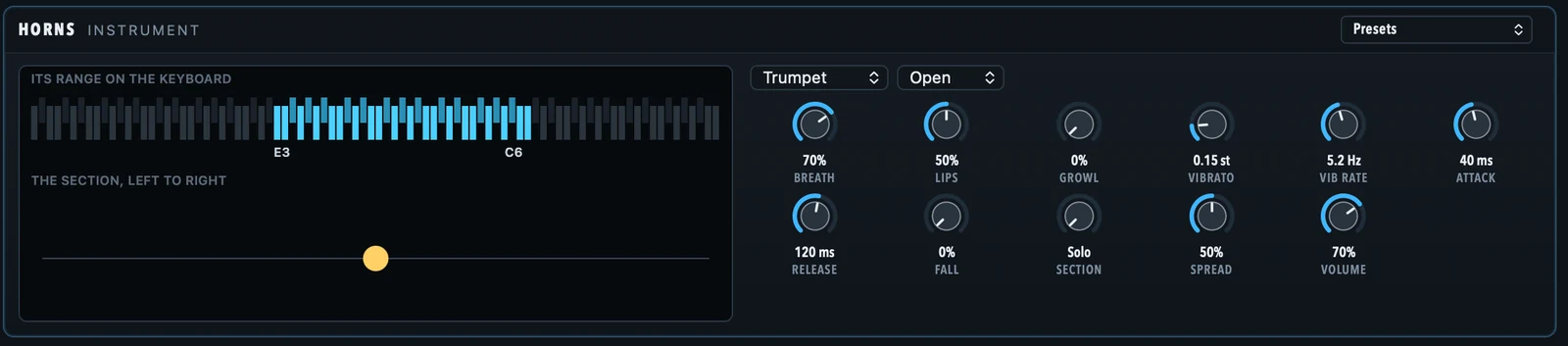
Horns
Trumpet, trombone, French horn, tuba and saxophones, from buzzing lips and a cane reed. Blow harder and it turns brassy. Mutes, falls, a trombone that slides, and a section of up to four players on every note.
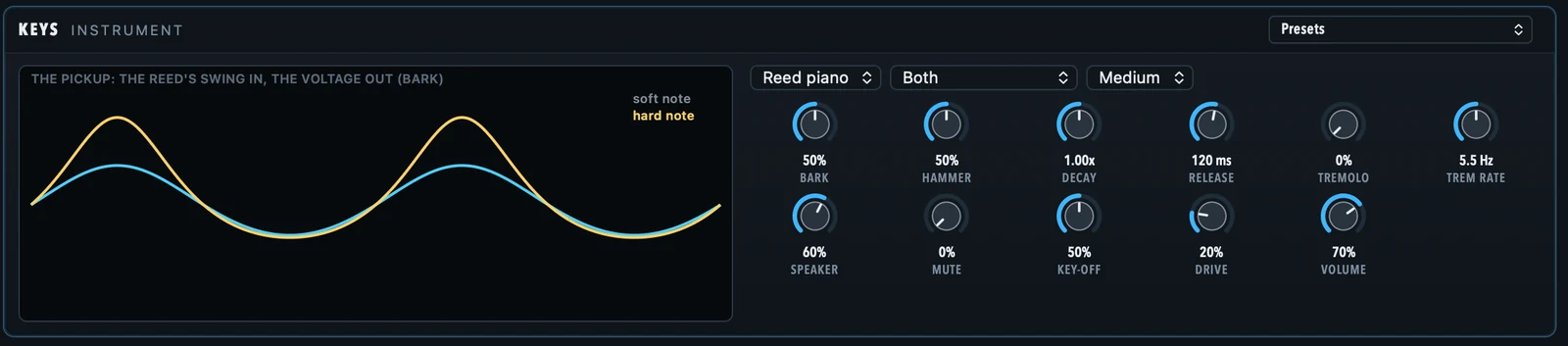
Keys
The reed electric piano that barks when you dig in, with its tremolo and little speaker, and the funky clav with its two pickups, tone switches and mute.
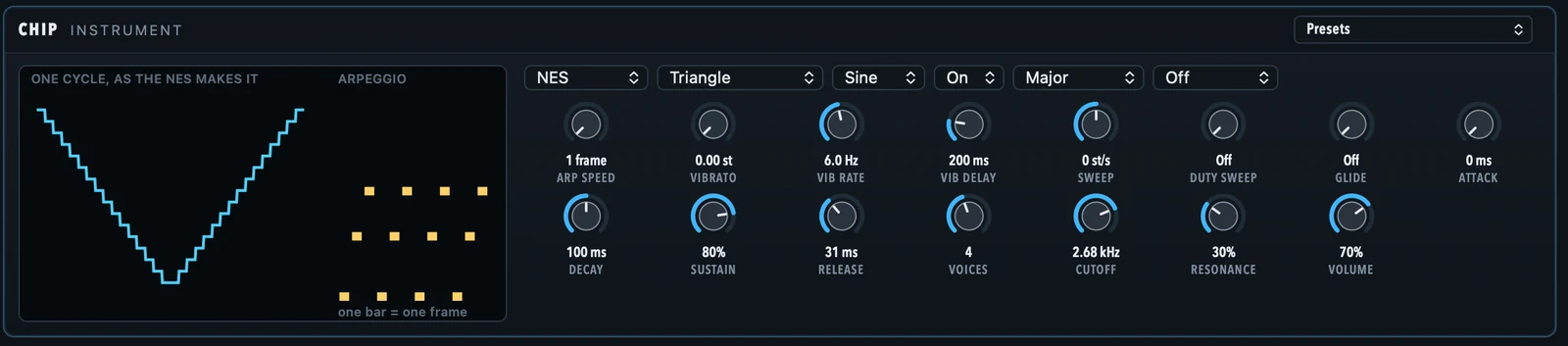
Chip
The sound chips of the NES, Game Boy and C64, down to their slightly-off tuning: pulses, the staircase triangle, wavetables and metallic noise, with chord arpeggios one note a frame.
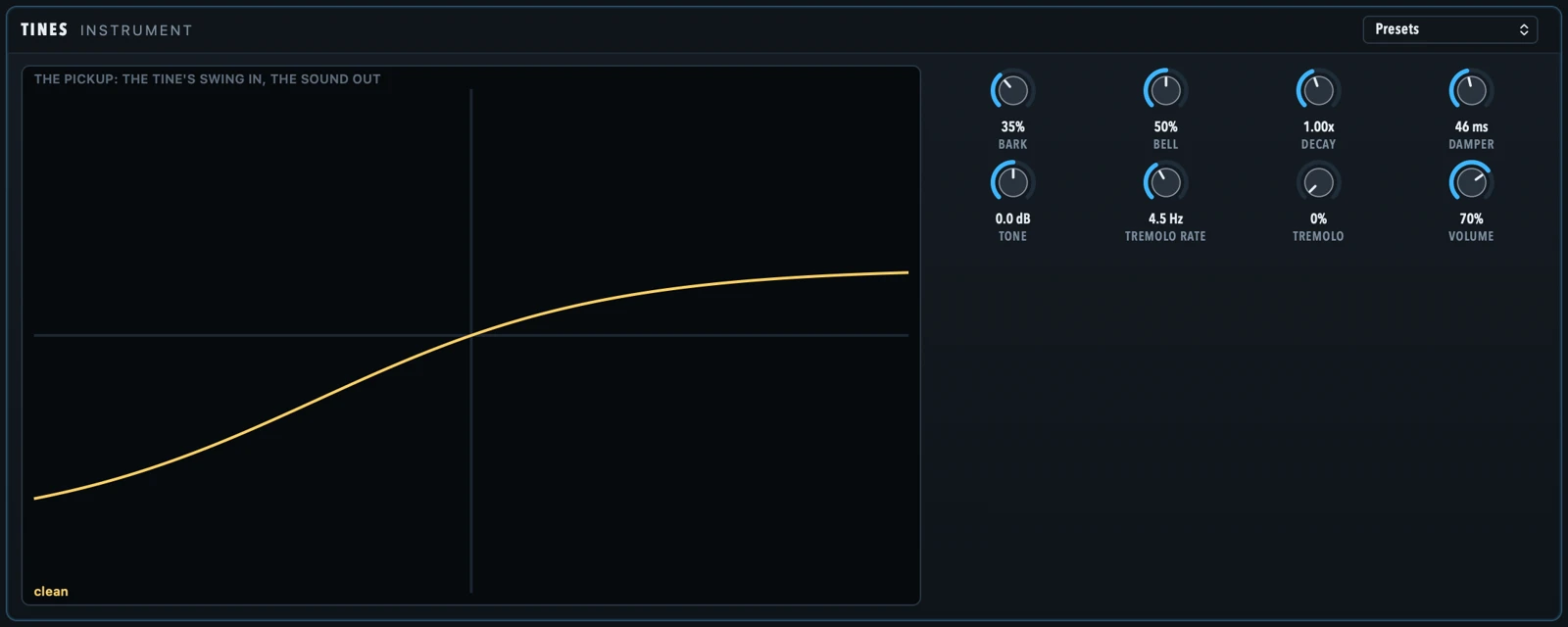
Tines
An electric piano modelled from hammer, tine and pickup: round when you play softly, bell-like bark when you dig in.
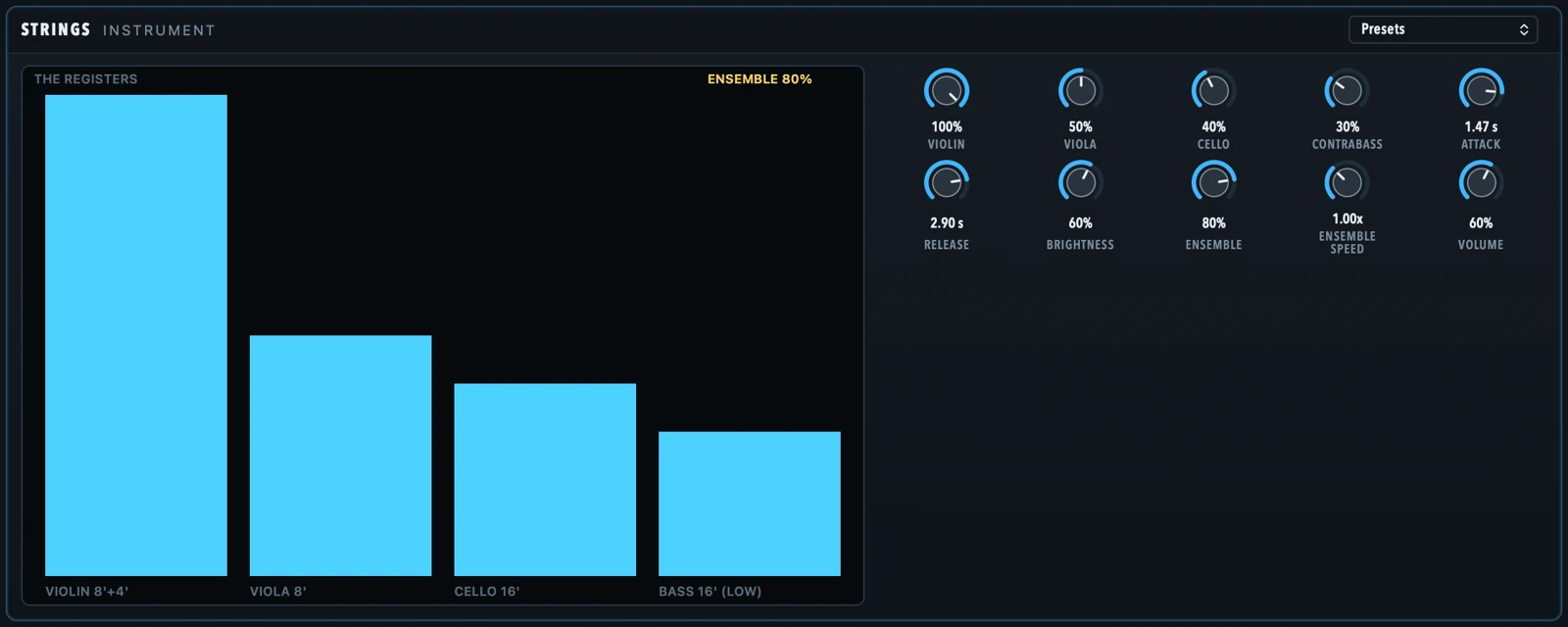
Strings
The 1970s string machine: violin, viola, cello and bass registers into the shimmering three-way ensemble.
And the rest of the orchestra
Forty-two effects
From mix-bus workhorses to sound-mangling toys, each tested for the problems the usual designs have.
Mix and master
Space and time
Colour and character
Spectral and voice
Tools
MIDI effects
A mix check with a model of the ear inside
The same hearing science as the Gridlogic modules, pointed at your mix.

Mix check
Hears your song through a model of the cochlea, shows where parts hide each other, and suggests the cut that frees them up. Click Apply and it's done.
Mastering assistant
Listens to the whole song, then sets up the master: a gentle EQ, glue compression only if the song needs it, and a true-peak limiter to the loudness you choose.
Ear analyser
Shows your sound along the cochlea, from low to high, the way your ear actually spreads it out.
Ear-fatigue meter
Keeps track of today's sound dose and reminds you to take a break before your ears stop telling you the truth.
Studio tools
- Stem splitter: vocals, drums, bass and the rest onto their own tracks
- Audio to MIDI, for melodies and drums
- Freeze and bounce, sample-exact to the live sound
- Map any knob to your controller in one click
- Presets for every device
Your plugins, safely
- Loads VST3 and Audio Units
- Crash protection: plugins can run in their own process, so if one crashes the song keeps playing
- Runs natively on Apple silicon
- The Gridlogic Rack and modules built in
Tested, not guessed
Every device has tests that run on every build. A few of the numbers:
| Device | What we measured |
|---|---|
| EQ | Bands within 0.22 dB of the ideal curve right up to 20 kHz, where the usual design is off by up to 15.7 dB |
| Limiter | True peaks held under -0.98 dBTP at a -1 dB ceiling; loudness meter within 0.01 LU on the EBU test set |
| Saturation | Aliasing 79 to 103 dB down, against 15 to 23 dB for the simple approach |
| Compressor | Look-ahead overshoot of 0.11 dB, and bass distortion cut from 3.9% to almost none |
| Reverb | Decay times within 3% of what you set |
| Gate | 2 flips on a decaying note where a simple gate chatters 78 times |